Tired of "What?", "Say That Again," and
"You Never Listen!"
The problem isn't just "selective" hearing.
Learn the simple communication
strategy framework I
teach my patients to
make conversations easier
in just 7 days.
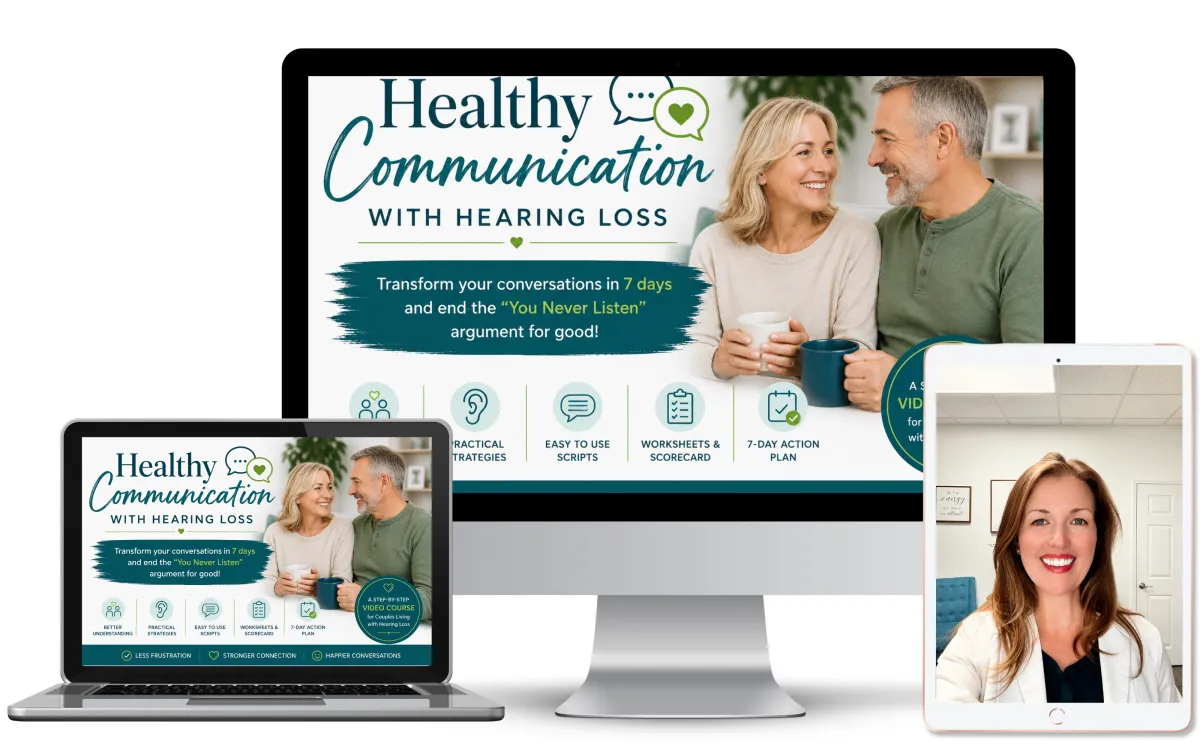
INSTANT ACCESS: $17
The same simple communication strategies I teach my patients — now in an easy 7-day program you can use at home.
✓ Stop repeating yourself over and over.
✓ Understand why they hear you, but don't understand you.
✓ Learn the #1 communication habit that changes conversations immediately.
"I changed one thing, ONE THING, and saw a difference right away. We are both so much happier."
WHAT'S INCLUDED:
* Learn why you are so frustrated talking to your loved one. (Spoiler alert, it is not just because they are hard of hearing).
* The number one reason conversations turn into an argument. Changing this one habit will improve conversations immediately.
* Make conversations easier—even in difficult listening situations.
* Understand why they hear you talking but still can't understand the words.
* Build simple habits that keep conversations from slipping back into frustration.
"I feel like I finally feel understood."
"This goes over everything I have been trying to tell my family."
"This guide has great advice and is 100% correct!"
"As someone who works with about 2 thousand elderly, this information is insanely helpful."
"Thank you! Now I have something to show my spouse that it isn't just me."
"I changed one thing, ONE THING, and saw a difference right away. We are both so much happier."
Results may vary and depend heavily on your commitment to implement the strategies.
Due to the digital nature of this product, all sales are final and no refunds will be issued.
What's Included:
* Learn why you are so frustrated talking to your loved one. (Spoiler alert, it is not just the hearing loss).
* The number one reason conversations turn into an argument. Changing this one habit will improve conversations immediately.
* Strategies you can use to improve any listening situation. Not all listening environments are created equal.
* How hearing loss actually impacts speech understanding. Being able to hear and being able to understand are not the same thing.
* Tips to stay consistent so communication doesn't break down. The goal is not perfection, it is small changes that have a big impact!
This guide is designed to improve your communication TODAY!
What if one simple change
made conversations easier?
What would it mean to you...
To stop feeling ignored
To understand what is truly making conversations harder
To not feel frustrated talking to your loved one
To understand what each other are really going through
That's why this guide was created. To help you and your loved ones have easier conversations and reconnect.
I remember the day a wife cried in my office after I reviewed simple changes she and her husband could both make to improve listening and conversations. She told me they had had so many arguments over the years because she thought he was ignoring her. He was frustrated because he felt she just yelled at him all the time. They left my office with a copy of Your Guide To Better Communication With Hearing Difficulty feeling hopeful and ready to make lasting changes.
You can have this with your loved ones too.
Imagine If...
✓ Family dinners felt enjoyable again
✓ You spent less time repeating yourself
✓ Your spouse stopped feeling ignored
✓ You felt more confident in conversations
✓ You understood what was being said the first time more often
✓ Communication felt easier and less exhausting
Designed for anyone having a conversation, no hearing aids needed!
For Less Than the Cost of a
Dinner Out
Learn the same communication strategies I teach patients and families every day to help reduce frustration, improve understanding, and make conversations easier.
One guide. Lifetime access. Immediate download.

Results may vary and depend heavily on your commitment to implement the strategies.
Due to the digital nature of this product, all sales are final and no refunds will be issued.